MollyNails: Product Quality, Testing and Proper Curing
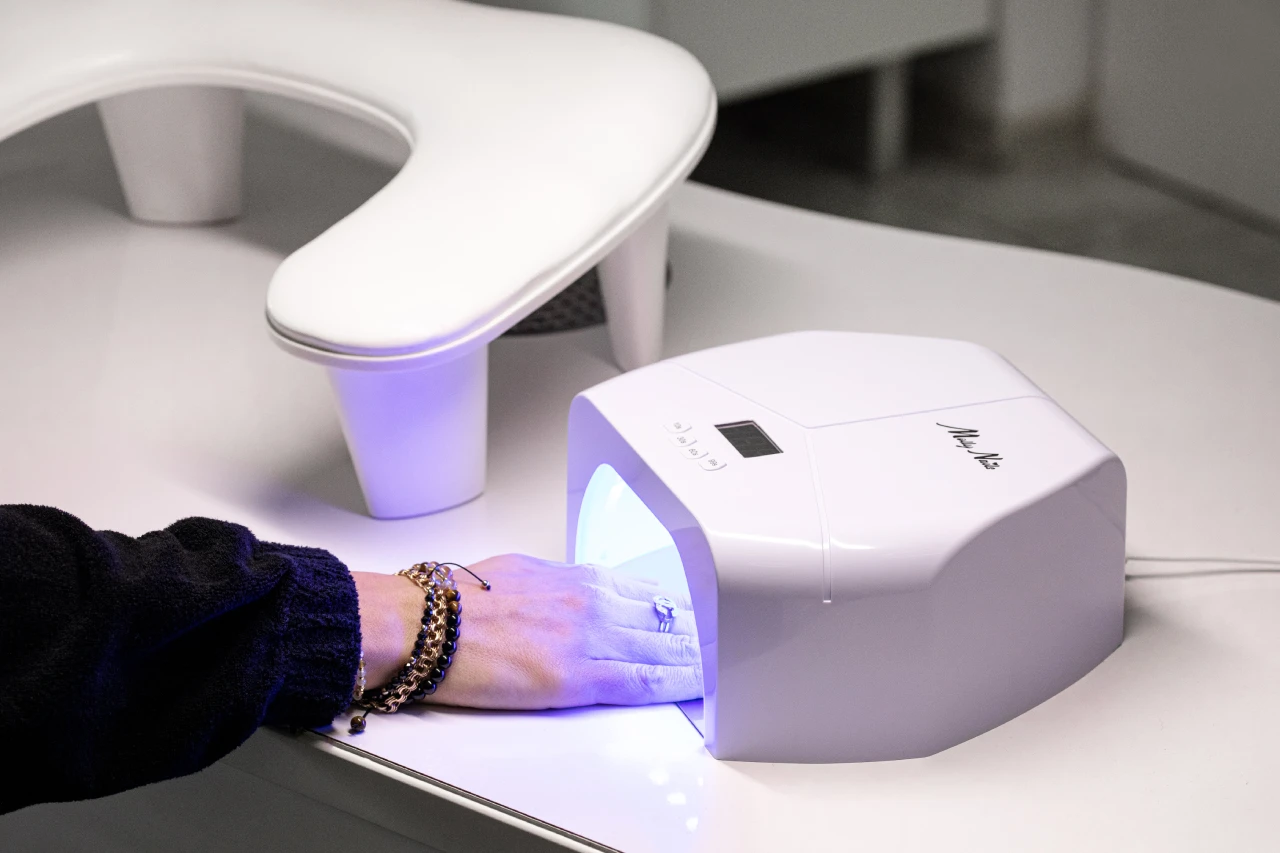
At MollyNails, we place particular emphasis on product quality, safe use and proper curing of our formulations. Each product requires appropriate polymerisation conditions, which is why our recommended curing times are not arbitrary – they are based on testing of the specific product.
We want nail technicians to work with a clear understanding of the products they use, follow the instructions and choose suitable equipment. Proper curing is essential both to the performance of the finished nail enhancement and to reducing the risk of skin contact with unreacted ingredients.
- How do we test MollyNails products?
- Why don't all lamps cure products in the same way?
- What does the curing time on the label mean?
- Why do UV/LED lamps need regular checks?
- Proper curing and nail treatment safety
- Special considerations for dual forms and thicker layers
- Our position as the manufacturer of MollyNails products
How do we test MollyNails products?
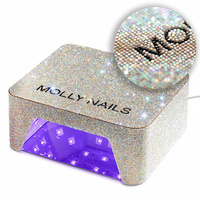
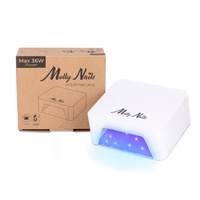
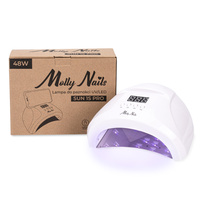
We assess our products under defined conditions using UV/LED lamps available in our range. These tests help us establish recommended working parameters for the product–lamp combinations we evaluate.
The curing time stated on a MollyNails product label is the recommended time established through testing of that product. It should be followed in accordance with the instructions, taking into account the application method, recommended layer thickness and requirements for the lamp being used. This does not, however, mean that the same product will cure identically in every lamp on the market.
Effective polymerisation depends on several interacting factors, including the lamp's parameters and the properties of the individual formulation.
Why don't all lamps cure products in the same way?
The wattage shown on a lamp's housing is not, by itself, a reliable measure of curing performance. Other important factors include:
- Wavelength range – the emitted radiation must be suitable for the photoinitiators used in the product.
- Light intensity reaching the product – this affects how the polymerisation reaction progresses.
- LED placement and condition – these influence how evenly different areas of the nail are exposed to light.
- Lamp design – the shape of the unit and the position of the hand affect how the light reaches the applied product.
- Technical condition of the lamp – wear or damage to components may change curing conditions.
- Product type and application – factors such as pigmentation, composition, layer thickness and application technique also matter.
For these reasons, a lamp's advertised wattage, appearance or visibly illuminated LEDs do not, on their own, confirm that a product has cured properly.
What does the curing time on the label mean?
The time stated on the label is the manufacturer's recommendation for that particular product and should be followed as specified in the instructions for use.
Do not shorten the recommended time on your own or assume that a longer exposure will always resolve a curing issue. Extending the curing time is not a substitute for using a lamp with parameters suited to the product.
If a product does not cure correctly despite following the instructions, check:
- the model and technical condition of the lamp;
- whether the lamp's specifications meet the product's requirements;
- the thickness of the applied layer;
- hand positioning and the position of the nails in relation to the LEDs;
- the selected operating mode and exposure time;
- any changes to the product or equipment.
If you are unsure, we recommend contacting our team to help identify the cause.
Why do UV/LED lamps need regular checks?
A lamp's performance may change over time. Its LEDs can still emit visible light without necessarily maintaining the parameters required to cure a particular product properly.
Always follow the lamp manufacturer's instructions, maintain the equipment in good condition and address any damage or irregularities in its operation. There is no single replacement interval that applies to every lamp: service life depends on the lamp's construction, quality and conditions of use.
Proper curing and nail treatment safety
Incomplete polymerisation may leave unreacted ingredients in the product. Skin contact with these substances can increase the risk of irritation and allergic reactions.
Curing products correctly, in accordance with their instructions, is therefore an important part of safe nail application. However, it does not guarantee that an allergic reaction will never occur. Individual sensitivity, application technique and avoiding contact between uncured product and skin are also important.
Remember that a hard surface or a nail enhancement that appears properly finished does not, in itself, confirm complete polymerisation throughout the entire layer.
Special considerations for dual forms and thicker layers
Working with dual forms, applying thicker layers or using highly pigmented products can affect how light reaches the full depth of the material. For example, Self Leveling Builder Gel Clear and Self Leveling Builder Gel Angel Pink may require different curing times.
It is therefore essential to follow the instructions for the specific product and application method.
Do not automatically apply the curing time established for a thin layer to every other application method. Any additional conditions or limitations specified by the manufacturer must also be taken into account.
Our position as the manufacturer of MollyNails products
As a manufacturer, we are responsible for the quality of our products and for providing accurate information and recommendations within the scope of applicable regulations.
We test our formulations and establish recommended conditions for their use. In practice, however, effective curing also depends on the lamp used, its technical condition, compliance with the instructions and correct application technique.
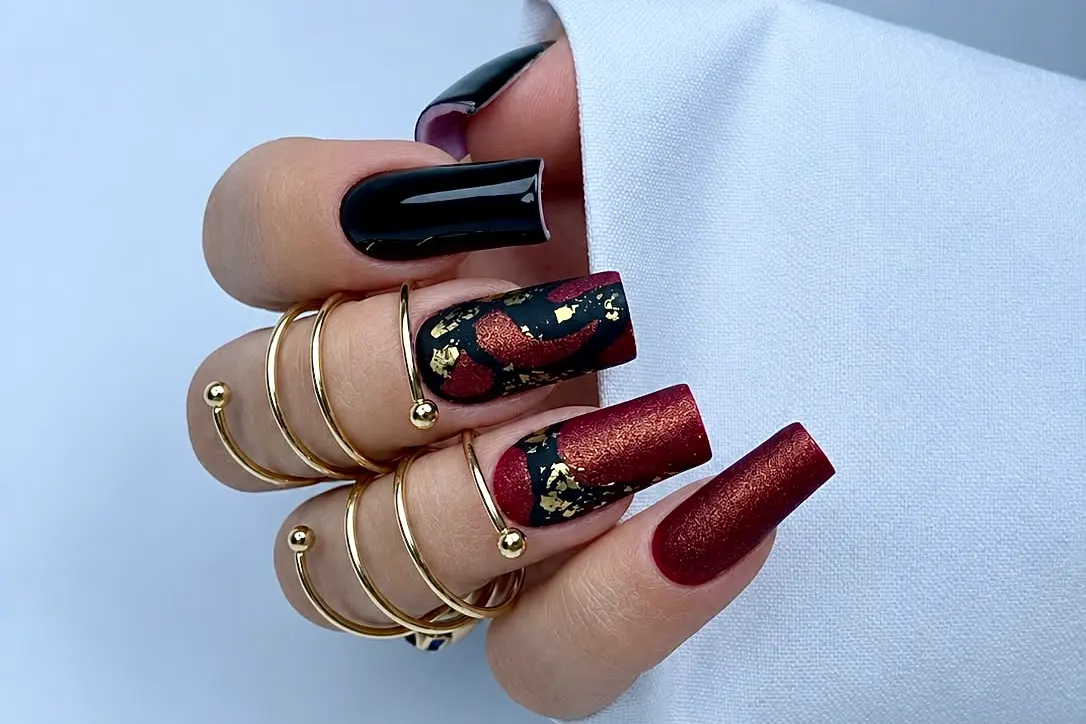
For example, our latest highly pigmented gel polish collections designed to provide coverage in a single layer, including The Trend Edit and La Vie en Rouge, require a recommended curing time of 60–90 seconds, depending on layer thickness, in the recommended BQ-L8 lamp. Older MollyNails gel polish formulations have a recommended curing time of 30–60 seconds, depending on layer thickness.
We therefore recommend using MollyNails products in accordance with their instructions and the curing time stated on the label, with a lamp whose suitable parameters have been verified.
If you have any questions about curing, please contact us with the product name, batch number, lamp model and details of your application method. This information will help us assess the situation more accurately and recommend the next steps.
At MollyNails, responsible nail styling begins with product quality, suitable curing parameters and careful application.

Read more
Recommended